
Bill Comes Due
“There was an unequivocal intention behind all of this, however. In part it was a turning away from the model of Pablo Picasso, which since the 1930s had overshadowed the work of de Kooning’s generation—and de Kooning’s own work perhaps most of all—to that of Henri Matisse, in particular the late Matisse of colored silhouettes scattered over white paper fields. Of equal importance and greater unexpectedness, though, was de Kooning’s last-minute reconciliation with Mondrian, whose advocacy of strictly nonobjective art had driven him out of Holland in 1927, and whom he once described as “that great, merciless artist…who had nothing left-over.” [Robert Storr on Bill de Kooning]
In ’97, I walked through the exhibition of de Kooning’s late works at MOMA. For years, there had been rumors surrounding de Kooning and dementia. There were stories of others finishing his works or removing unfinished works from the easel. Conspiracy theories spread and blossomed around the real authorship of these late paintings. They were, after all, not like the work we had all come to love.
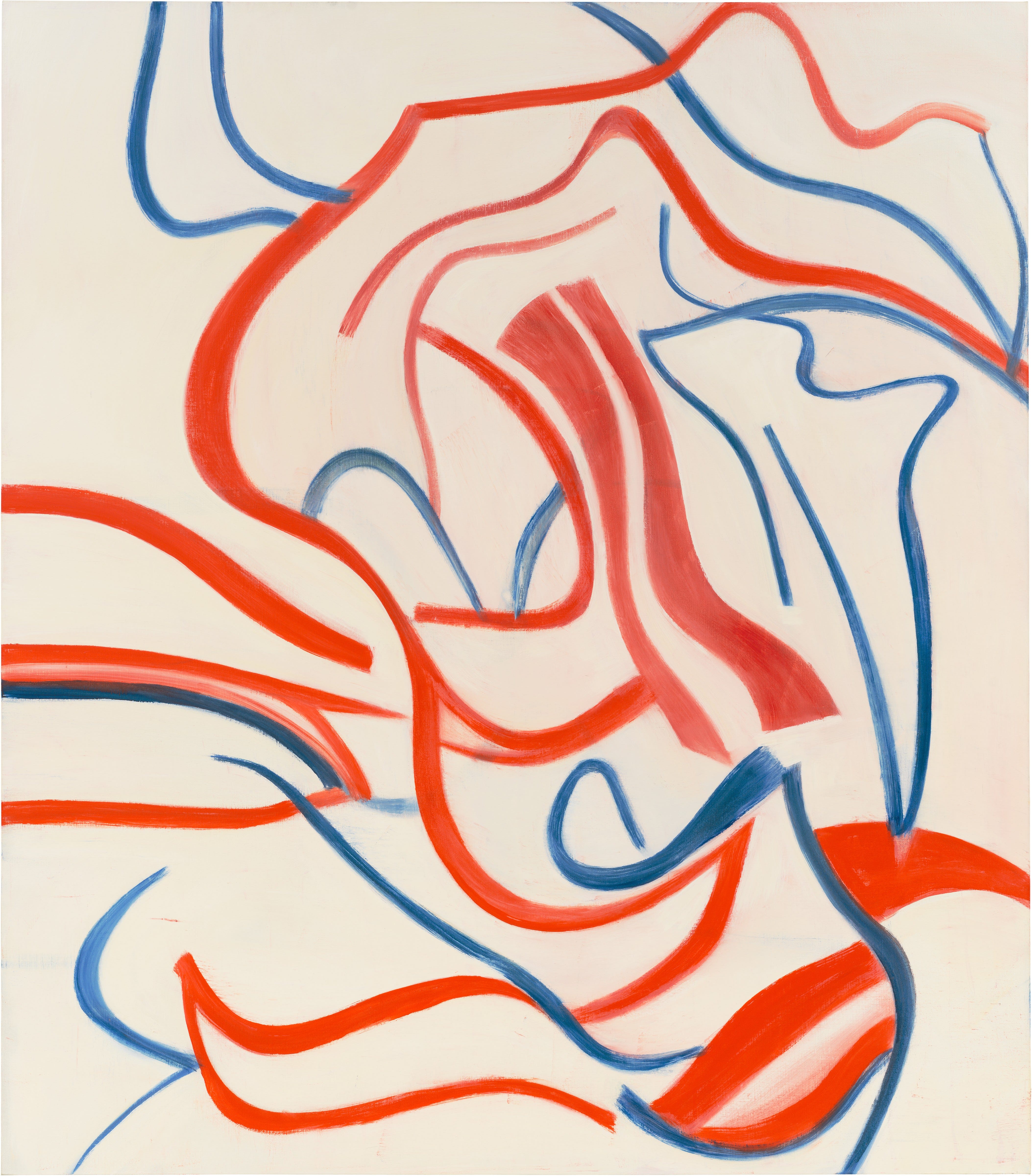
Despite the rumors, it was evident that a singular intelligence was alive and working in these late paintings. Bill had simplified his work, removed every excess. These paintings were exciting and unexpected, direct and economical masterpieces encompassing his career and life, and they became some of my favorites. Surprisingly, there were not many who thought the same.
The ’90s were all over the map for painters, and quite frankly, it was the decade when the painting avant-garde groaned, rolled over, and died. Sad to say, I saw it happen. We had lost the drive and wherewithal to paint. Most of us did not feel any pressure to innovate. Instead, we indulged in institutional critique, pastiche, and illustration. Abstract painting became exclusively about the history of painting instead of about life. It became tasteful. And for the most part, we seem to be stuck right there, ever since.
“I have no nostalgia, however. If I am confronted with one of those small Mesopotamian figures, I have no nostalgia for it, but, instead, I may get into a state of anxiety. Art never seems to make me peaceful or pure. I always seem to be wrapped in the melodrama of vulgarity. I do not think of inside or outside—or of art in general—as a situation of comfort. I know there is a terrific idea there somewhere, but whenever I want to get into it, I get a feeling of apathy and want to lie down and go to sleep. Some painters, including myself, do not care what chair they are sitting on. It does not even have to be a comfortable one. They are too nervous to find out where they ought to sit. They do not want to “sit in style.” Rather, they have found that painting—any kind of painting, any style of painting—to be painting at all, in fact, is a way of living today, a style of living, so to speak. That is where the form of it lies. It is exactly in its uselessness that it is free. Those artists do not want to conform. They only want to be inspired.” [de Kooning’s discussion about painting at MOMA in 1951]
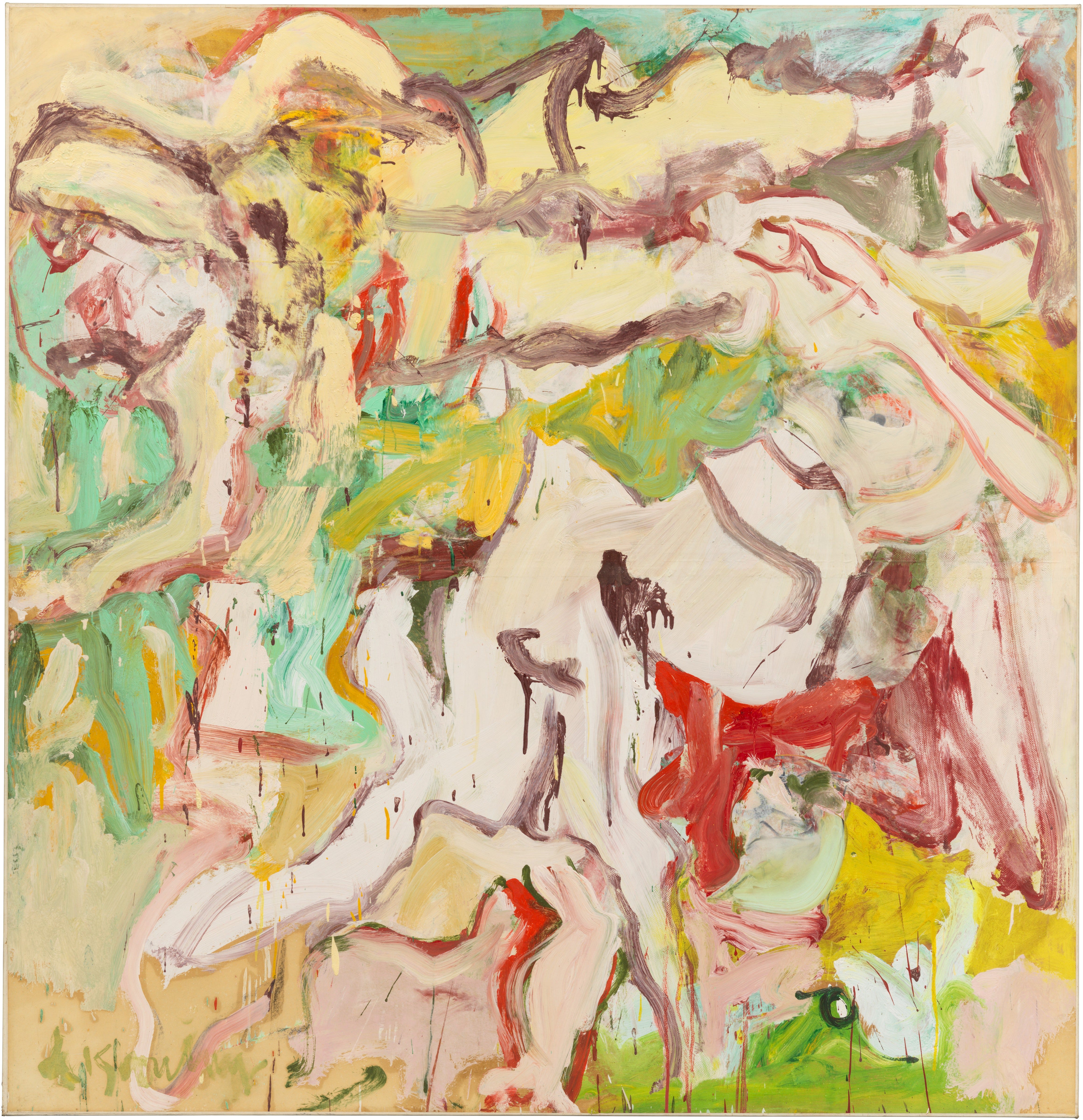
I hadn’t thought of de Kooning for a while, lost as I am in my deep confusion. When out of nowhere, Gagosian suddenly presents a show of de Kooning’s “melodrama of vulgarity” through a Tarantino remembrance. I went, dutifully. The exhibition starts in the middle, goes to the end, then moves quickly back to the beginning, forwards to the middle, back again to the beginning, and finally ends without an end. It’s a curatorial conceit, much like the Shuffle feature on your music player. But when trying to find one’s bearings, this disorderly reordering was insufferable.
Several early technical marvels were on view as de Kooning tried to slip past Picasso. In these works, he left out any direct visual confrontations with Cubism’s premises. Instead, he concentrated on the after-effects of his famous “glimpse.” Bill melts, dissolves, and blurs Picasso’s innovations. His breakthrough “slippery” work isn’t exactly different from Euro Modernism, but his amblyopia kinda felt like a cheeky innovation. It made Cubism sloppy and sexy. Perfect for the 1950s.
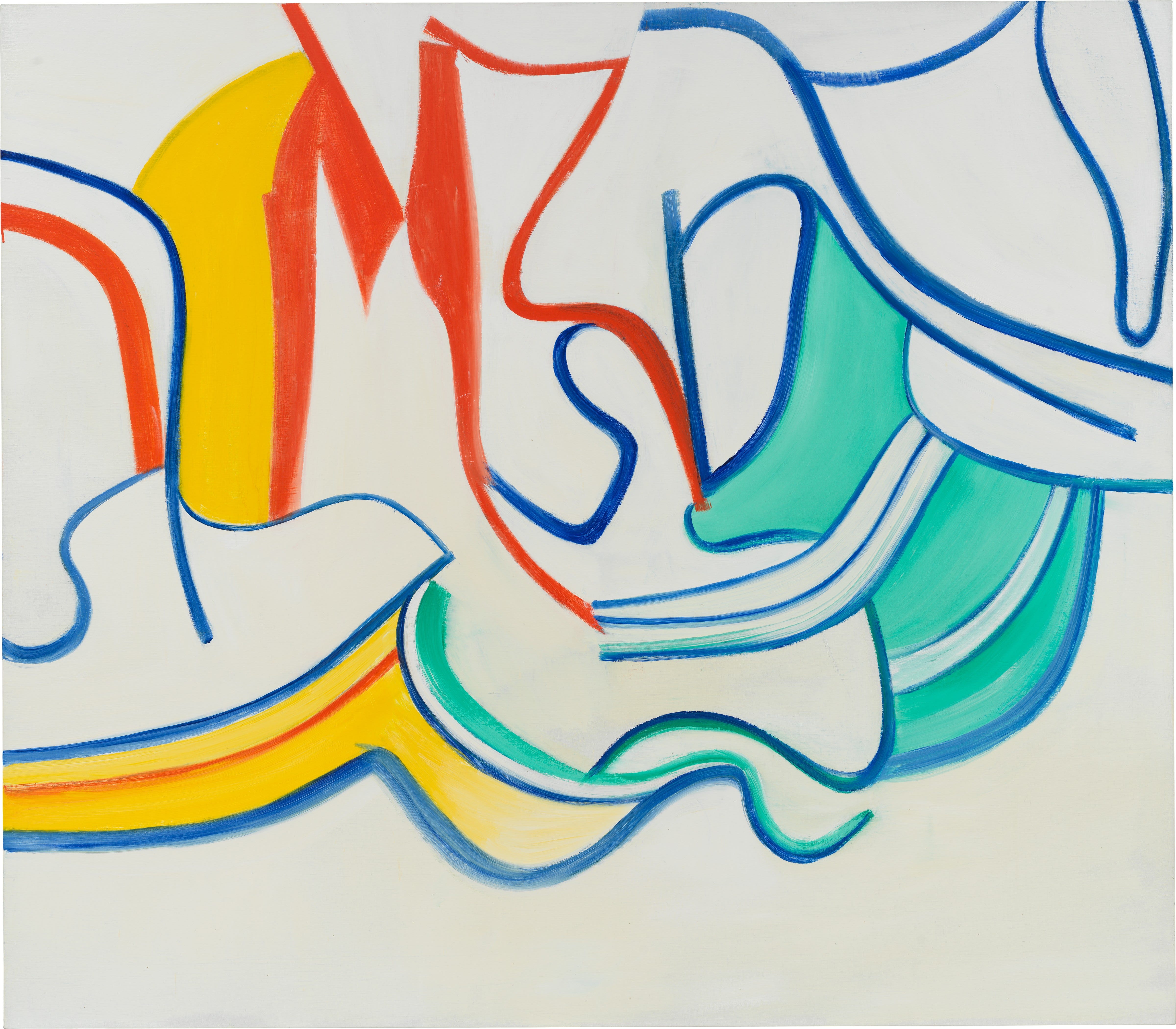
A few decades later, after many drippy, gooey, sometimes wonderful alcohol soaked paintings, de Kooning tightened up and fully developed his artistic style. In the late work, he blends Mondrian’s purity of form with the rigorous line work of Picasso and Matisse. These pieces are rich and contemplative, redefining the possibilities of both European and American Post War Modernism. In essence, late de Kooning orchestrated a revelation, similar in force to that of his good friend Philip Guston. He painted with a deeper purpose, showcasing a harsher beauty, maturity, and style that leaves nothing to spare. And this show reaffirmed my memories and understanding of that challenging show from the ’90s. Excellent.
But I am sorry to say – fuck that sculpture.
Endless Painting de Kooning @ Gagosian
Summer Camp


