
Sex and Power
Picasso and Dunham facing the inevitable
I have great respect for Picasso’s late works. They are ambitious and controversial paintings that challenge our expectations. In his last decade, he transformed the history of cubism through expressionism, infusing it with his intense passion for life, resulting in some remarkably candid and provocative art about creativity, sexuality, and aging. Even in the 21st century, these works remain groundbreaking. Picasso has valuable lessons to teach us.
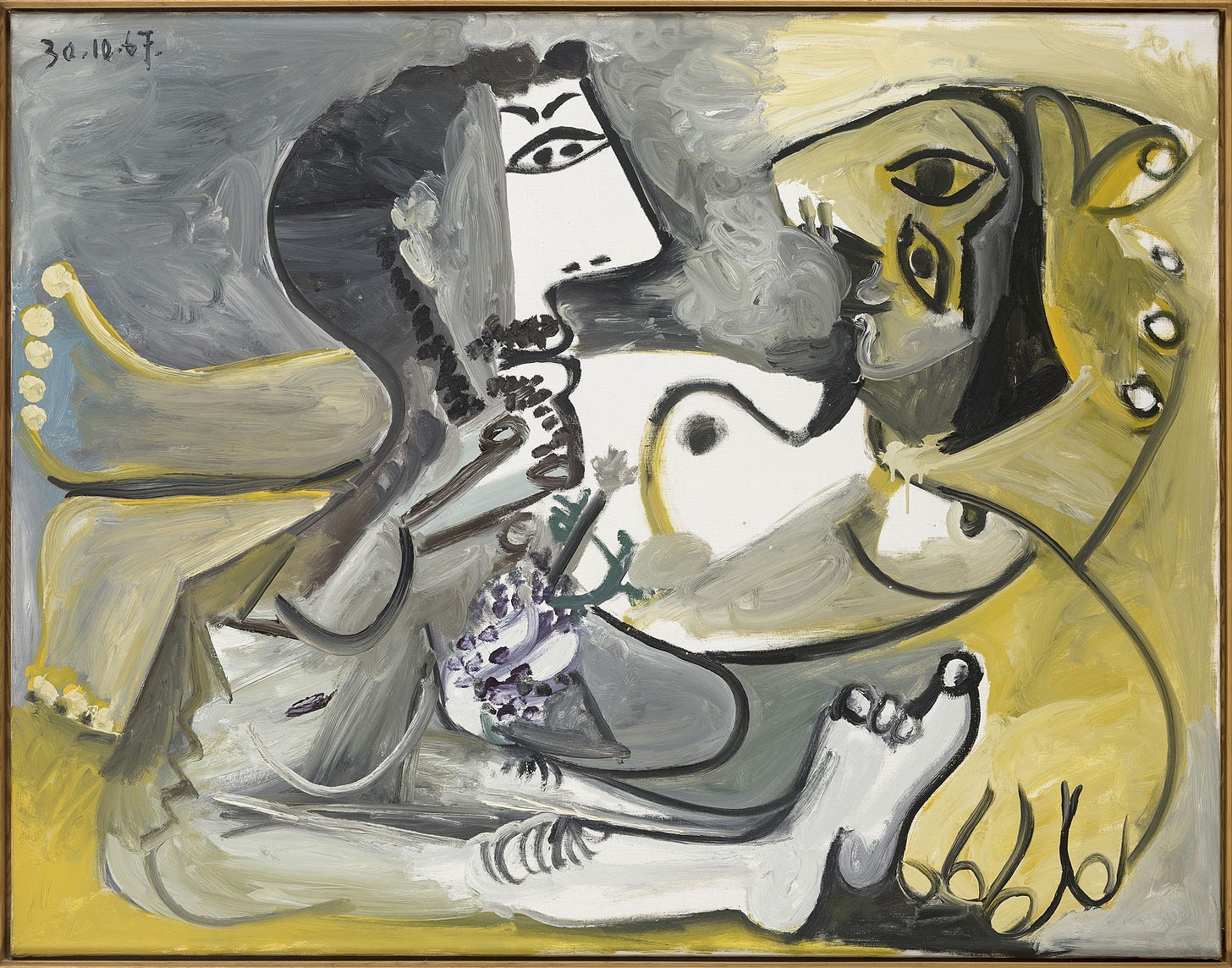
The first lesson is about how our physicality is affected by what we see. Picasso was always interested in the scale of things. Scale can locate and pull us into the pictorial space, deepening our connection to the imagery. It can heighten drama and push us back on our heels. Even in the smallest paintings, figures can feel like giants. This lesson is lost on many abstract painters. They often confuse physical size with pictorial scale, diminishing the visual impact within the composition. They have not taken Picasso’s lesson to heart and leave us with inert and unsatisfying visual experiences.
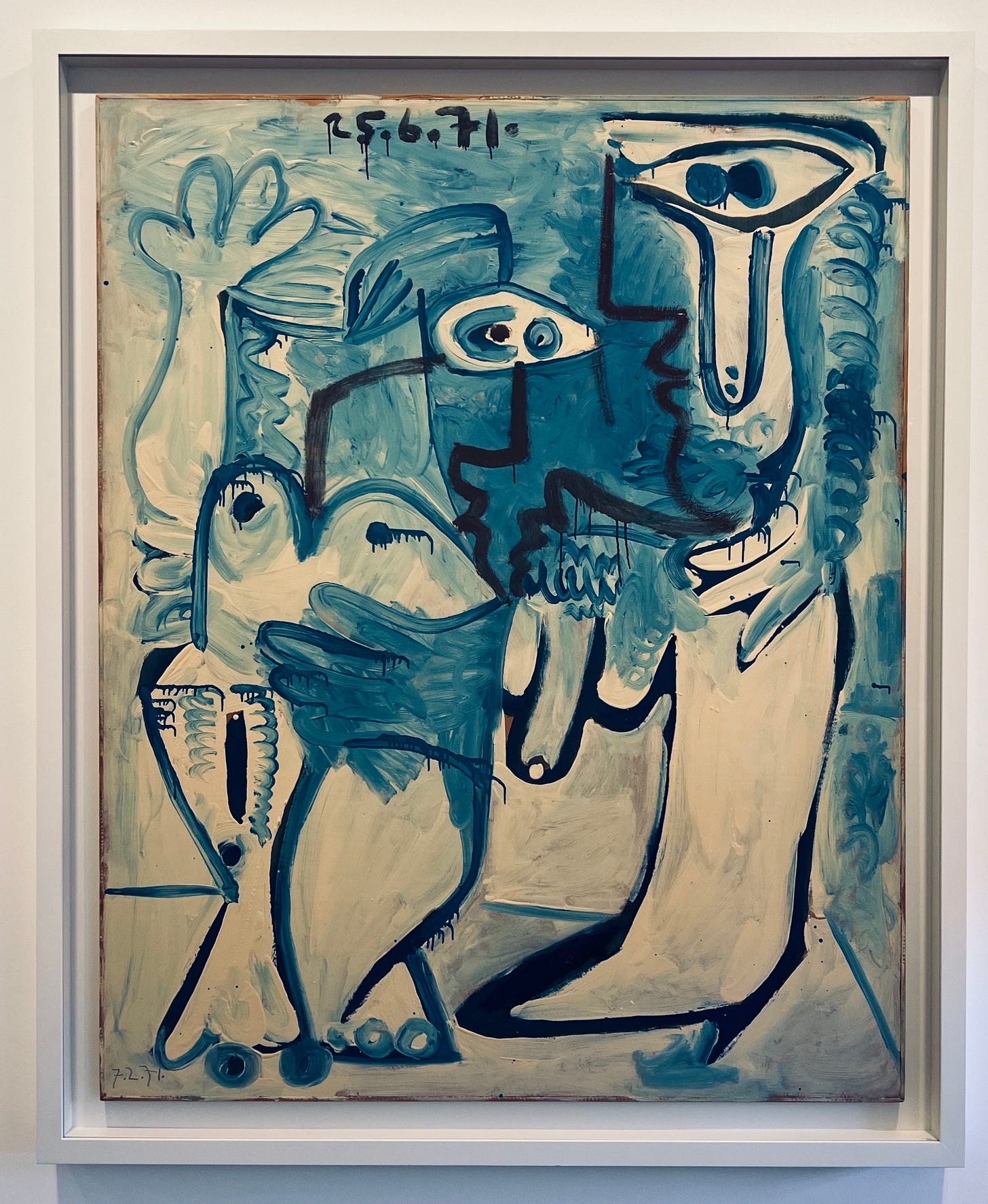
The other lesson might seem easier, and a no-brainer, but many of us can’t achieve it. We should be ready to put our inner lives onto the canvas somehow and confront the uncomfortable intimacy that painting requires. An artist’s vision should challenge us to see life differently no matter how “lean” our images may be. (Think of the “spare” works of Stella, Rothko, or Newman.) For Picasso, art was self-portraiture, even when he disguised himself as a Musketeer or a Minotaur. Nearly every picture shows his struggles with his humanity – power, yearning, life, death, and sex – especially in those late works. He never hesitated to crack himself open. Spending time with these fantastic late paintings might teach us to embrace this impossible lesson.
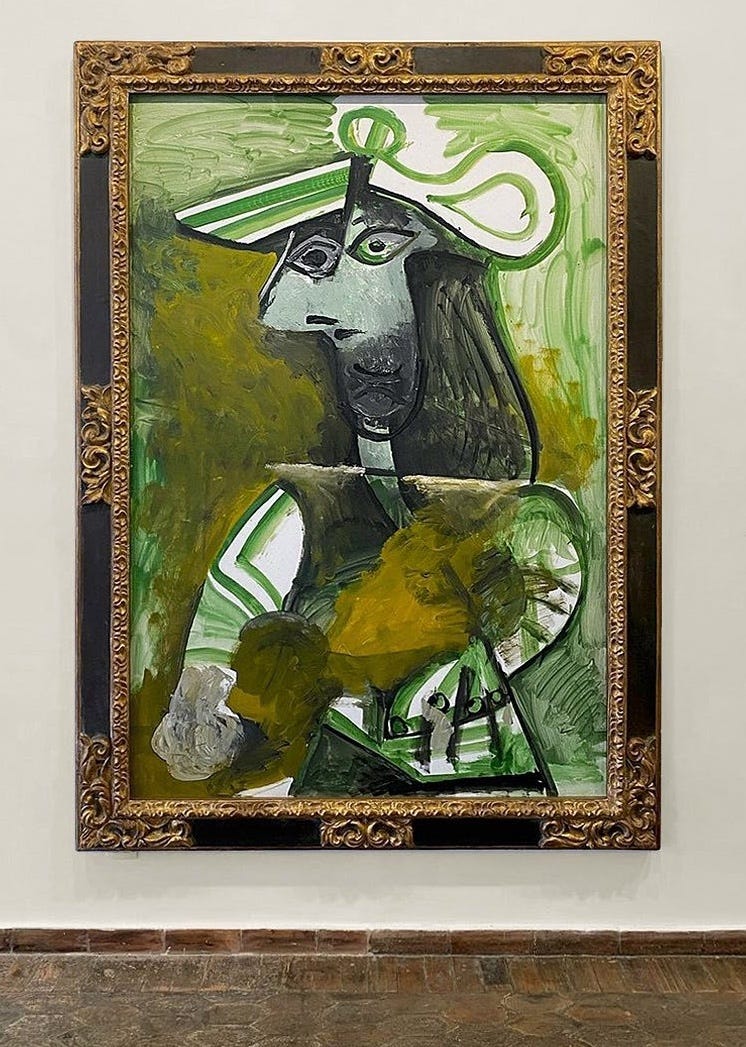
“And, finally, there is the sexual element—some people may object to that. They may feel his insistence upon intimate female anatomy is carried too far. But that’s their own problem. In any event, one can say that from an anthropological point of view, Picasso has enlarged our knowledge of human nature, because never before has the sexual craving of a very old man been expressed so powerfully and in such great depth. So even for psychologists, in this sense, the pictures shed light.” [Gert Schiff in conversation about Picasso’s late works with Ronny Cohen]
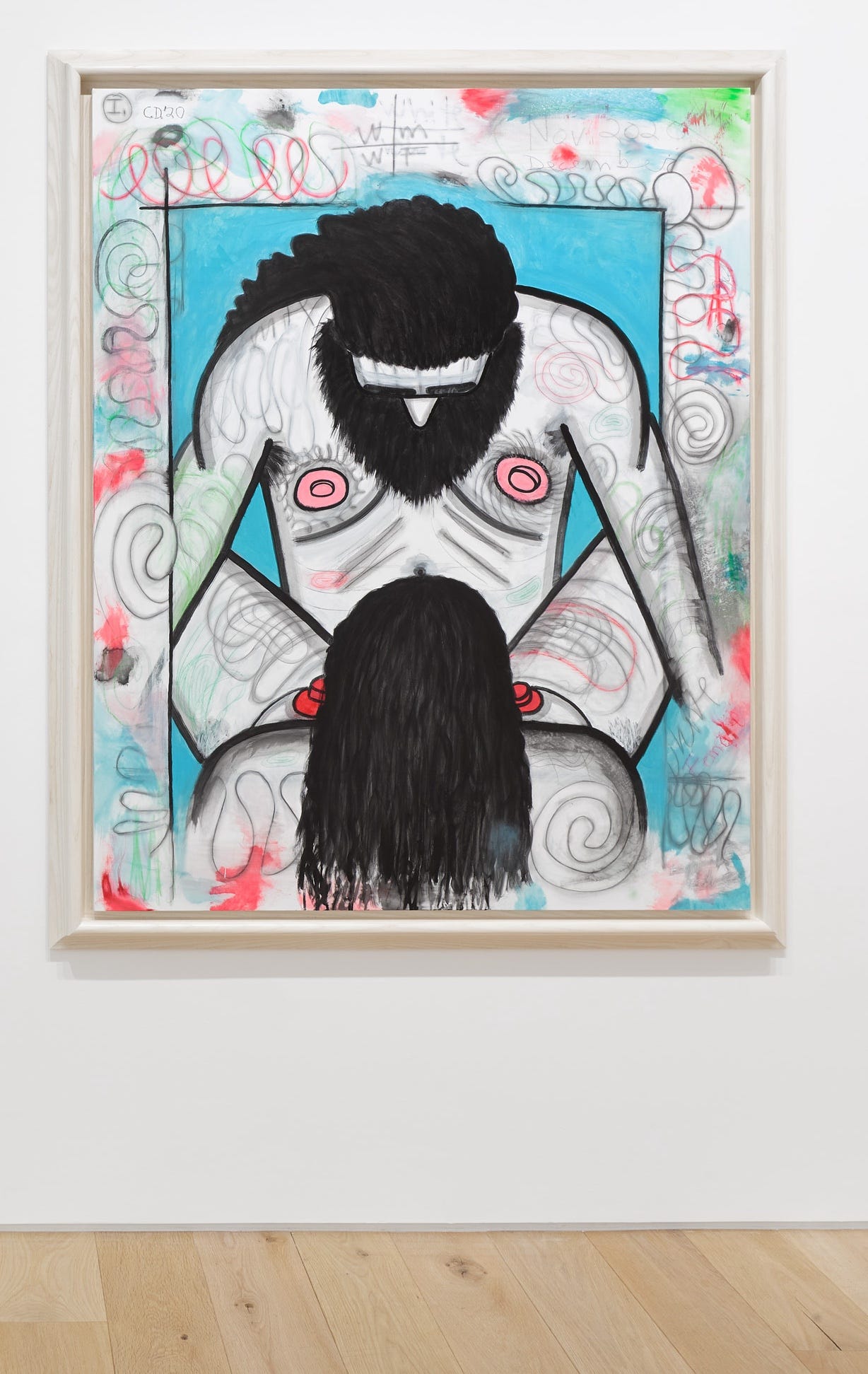
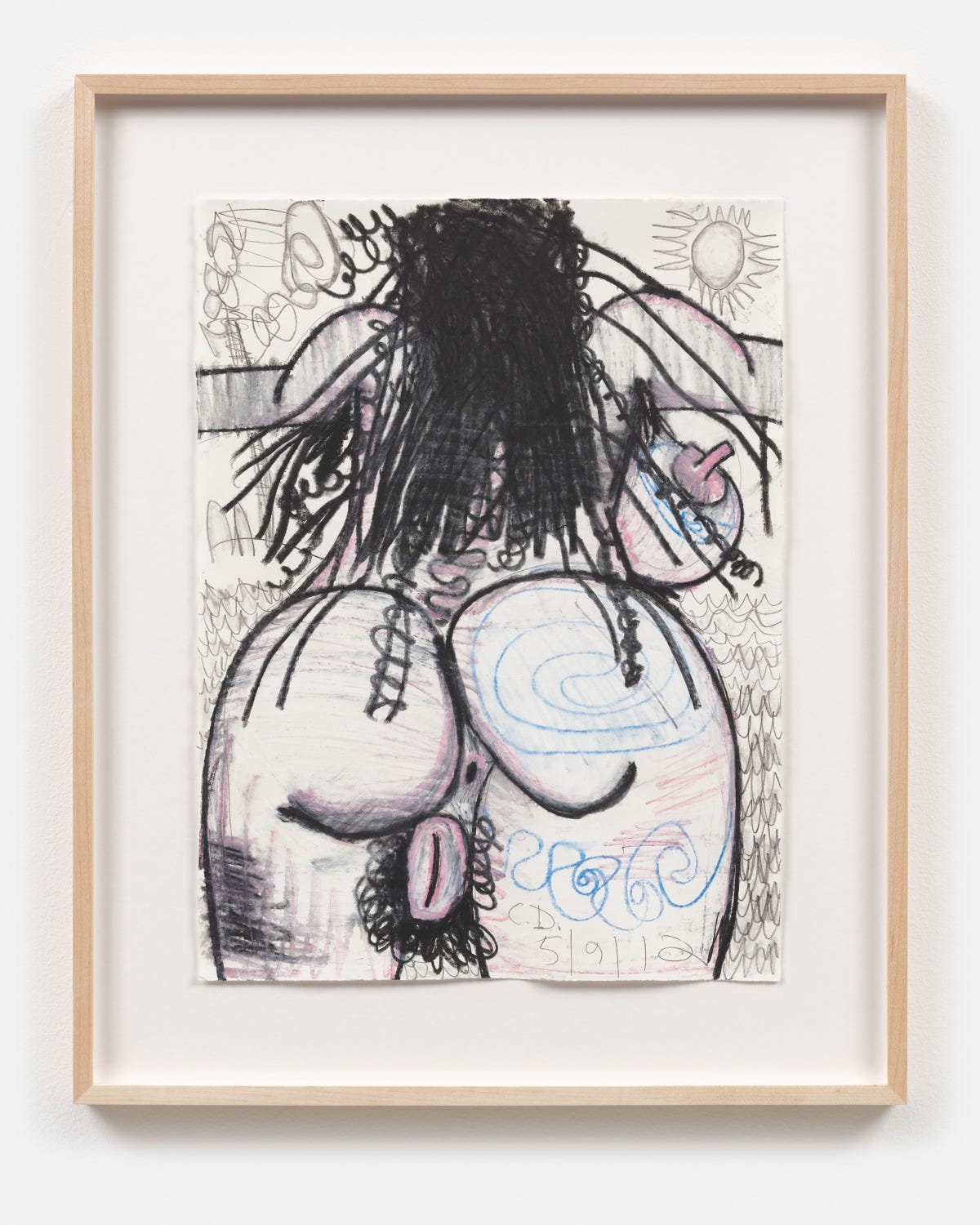
These lessons of scale and self-confrontation drive Carroll Dunham’s work. Dunham understands scale. His work feels larger than life, no matter the size of the artwork. Unexpected shifts in scale heighten the tension, space, and power within Dunham’s images, drawing us into this larger-than-life world.
“So, I’m interested in the idea of a painting that is not, by contemporary standards, enormous, such as this painting, where the scale of what’s being represented is rather enormous. I mean, if a human the size of what’s in these paintings walked out of the painting and stood in the room, we’d be quite disturbed by that. And it’s true of all these things. Not the smallest ones; they’re more or less life-sized, I think, if you actually projected them onto a human body. But all the other paintings, which are quite large, granted. But the scale of what’s represented within these quite large paintings is gargantuan. And I don’t think we appreciate enough how much we’re exposed to that kind of thing in contemporary life. Like the, you know, billboards and advertisements on the sides of buses and things. I mean, walking past the window of a shop, and you see enormously over-scaled representations of people. So, size and scale are both really interesting to me.” [Carroll Dunham interview at Max Hetzler 2022]
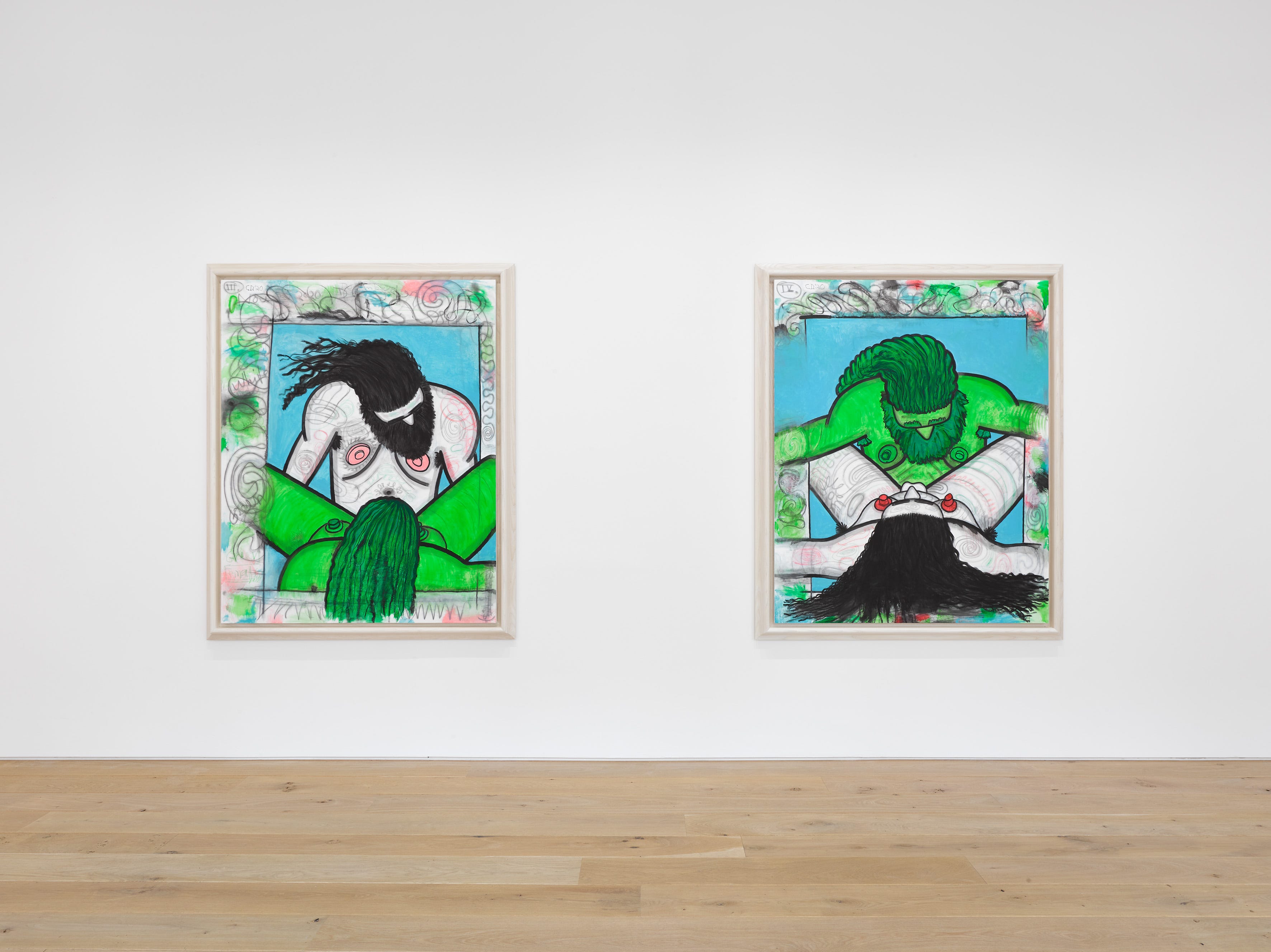
Picasso’s “impossible” lesson informs Carroll’s exploration of power through sexuality. He assumes the roles of the “dickhead” or the “caveman” to stage grand narratives, much like Ancient cultures used mythological beings to tell transformative stories. Because of Dunham’s frankness about these themes, other painters tend to shy away from his work. They may find his imagery raw and aggressive, too personal or specific. This is wrong-headed. Painting should be pushing our boundaries.
In the documentary “The Artist’s Studio: Carroll Dunham,” when Roberta Smith enters the room to begin a frank conversation with Carroll, you can almost hear her gasp when she sees the paintings. This visceral reaction to painting is refreshing. One of the things I like most about these drawn paintings is that they are not Modern. They are strange hybrids of historical and contemporary sensibilities and do not play by the rules of Modernist painting. And that’s where artists should be. It’s time to challenge our ideas of what 175 years of the Modern era might mean.
I like to put interesting shows together in my mind, and this is another show that would be fantastic to see in real life – Picasso’s and Dunham’s Late Works. Your move museum curators.

Abstract Painting


