
Abstract Painting
A thought or two…
I talked with my friend Mike Zahn a few days ago, and we discussed Twombly and the fate of abstract painting in the 90s. Twombly was always there if you know what I mean. But a full slate of newish abstract artists seemed ready for primetime. Abstract painters thought that they had paid their dues in the go-go 80s. They had remained in the background during the first global expansion of the art world. They worked and prepared and came to believe the 90s would be theirs for the taking. The decade began with a concerted effort to make this happen with coordinated gallery shows, magazine articles, and critical mass taking hold in the US and Europe. It went nowhere. It caught no one’s imagination. It did not create a new vital movement. All it did was promote a kind of institutional affirmation.
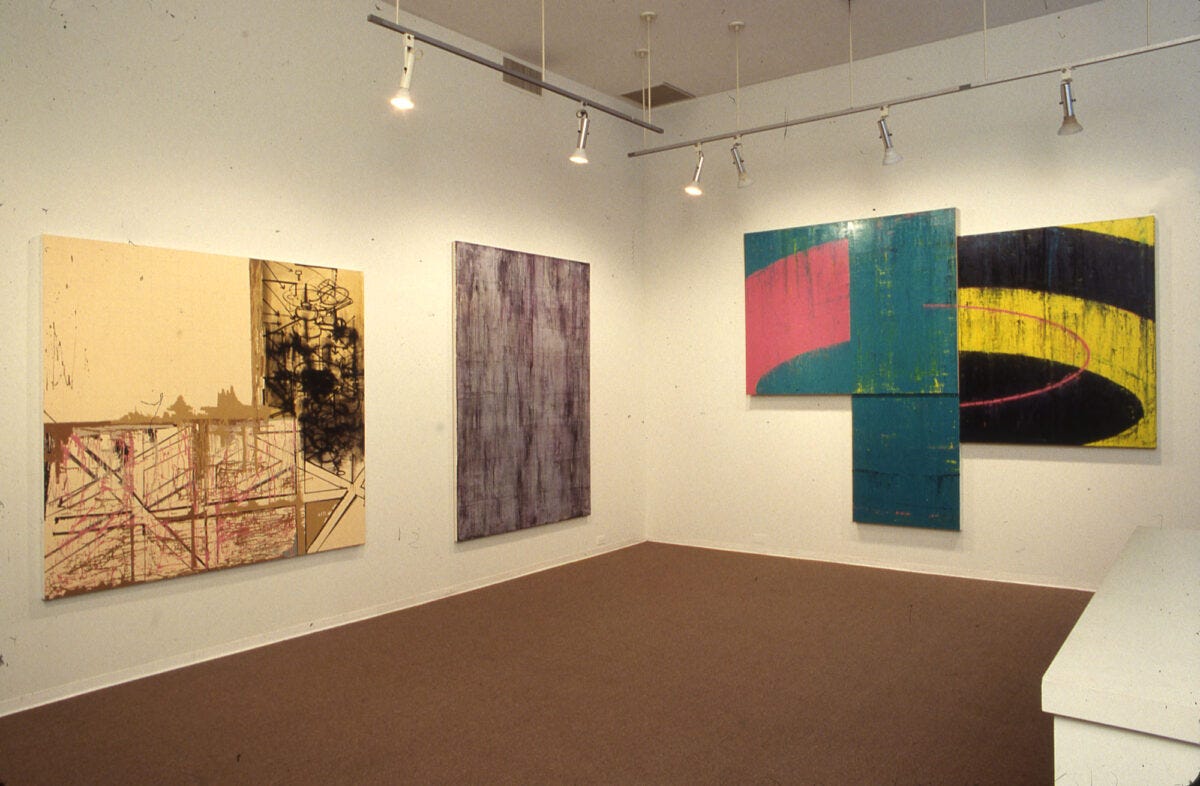
Since then, we’ve had moments when abstract painting made a fashionista return to relevance. People would get excited. Money changed hands. Magazine articles were written. Careers began and ended. Most of it created a momentary stir and fell back into the ether. The last real effort advanced for abstract painting was the return to formalism in the 2010s. That was called Zombie Formalism, and much money changed hands once again. This renewed interest in abstraction brought about a reconsideration of “New Abstraction” or “Conceptual Abstraction” from the 1990s, but this, too, did not last or inspire.
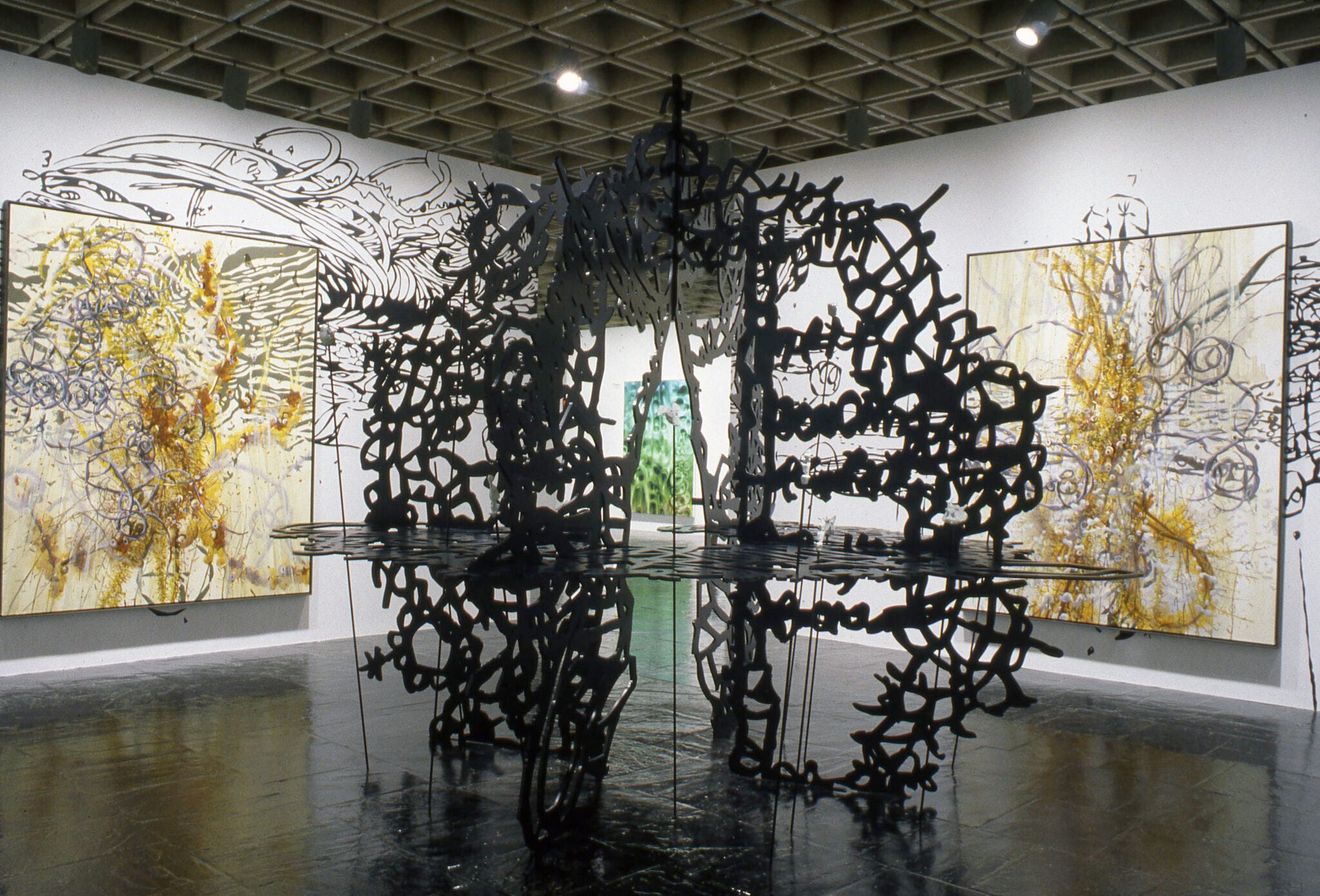
So, what should we artists be looking for, especially in abstract painting, especially in the studio? Carroll Dunham nailed it with this quote.
“We have had “abstraction” with us long enough that there is probably a consensus about what it is, although any definition would get very fuzzy at the edges. In the contemporary context, there appears to be a divergence between “sincere” abstraction and “ironic” or even “bitchy” abstraction, although frequently, and paradoxically, the latter feels emotionally deep and on target, and the former seems full of shit. This split is related to the question of whether there can still be “progress” or “discoveries,” and there have been particular and different approaches to exploring this issue, notably in Germany and America. It keeps coming back to definitions, and to the relationship between the personal and the public.“
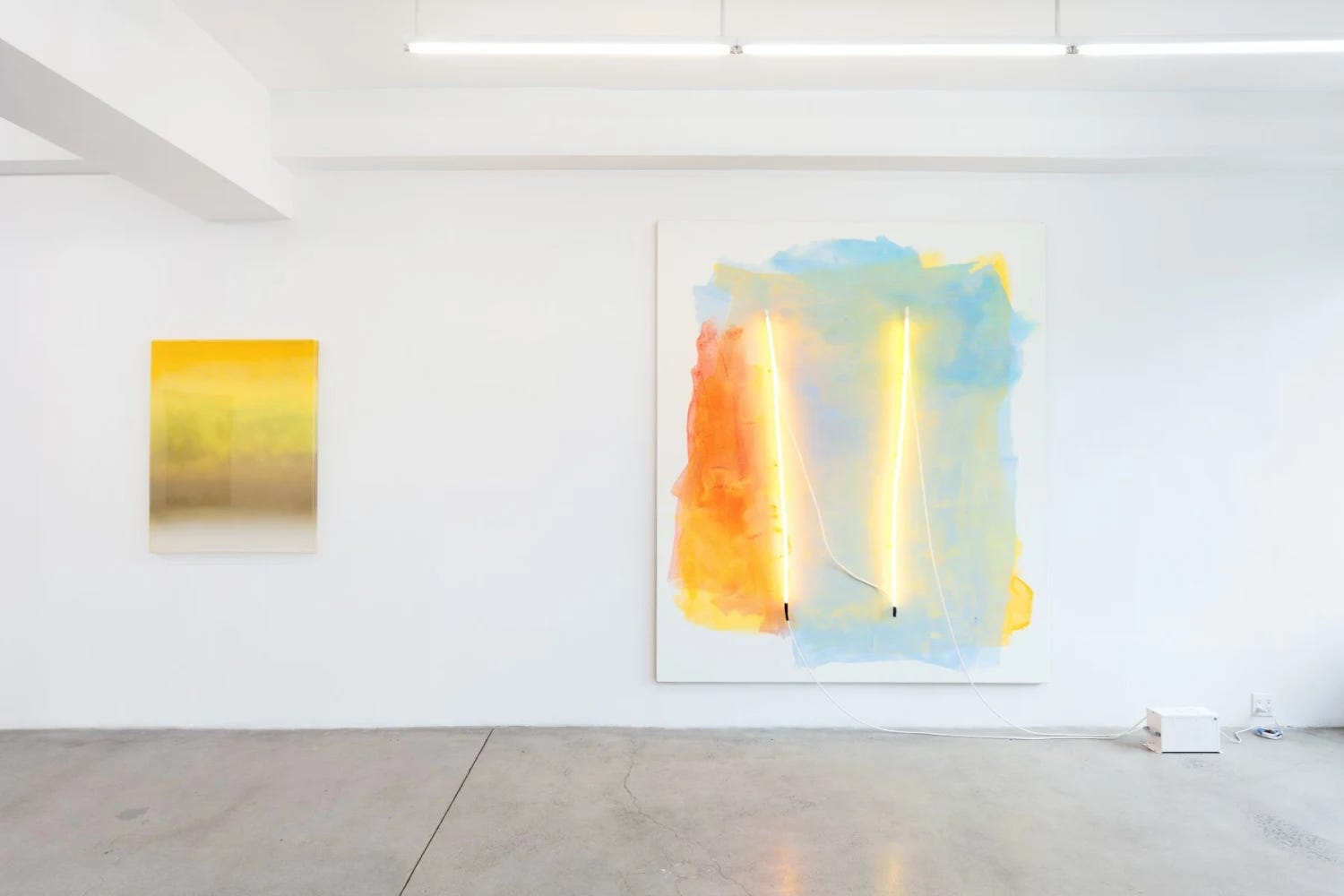
Dunham’s bifold description is beneficial. Let’s consider that abstraction is no longer an aberration and is part of how we move through art. We should be able to find new ways to use abstract forms to examine sincerity, authenticity, and the history of our understanding of abstraction. We can reach back to Old Masters like Cezanne, Renoir, Monet, Stella, Judd, and Serra and use their achievements to understand what it means to be an abstract painter, a human being at this particular moment in this particular New World Economic structure. I’m not talking about emotional processes or expressionism. Nor am I talking about a conceptualist reformation of form and material.
In a broad sense, whatever kind of painting we see, we want to be convinced of its reality and imagery. Think of the kinds of abstract paintings that do just that. Look to the Masters like Picasso, Matisse, Pollock, or Miro; it’s your choice. We want that painting to contain us and pull us in. We want that work to activate our understanding of a certain kind of visual experience. We want that painting to take us somewhere we would not necessarily understand or imagine ourselves. We want the difficulty. Most abstractions made today fall short of this visual process. They reaffirm what we already know. They feel easy and inert. They fall into the background. They do not open our minds. We should want a more daring relationship between abstraction and meaning, thought and execution. We should want this complex language to connect to our human experiences. Painting should crack us open and lead us to a different understanding of this time, this place, and our understanding of our existence in it.
This prescription is a tall order, and the best any of us may see is something that feels like it’s trying to break free. But honestly, in every show I see, that’s my expectation. I prefer the grand failure to the ordinary.

il gentiluomo


