
il gentiluomo
It took me a long time to come to Twombly. I thought there might be something going on in his work that I couldn’t see, but I could not get there. It wasn’t until I saw the show at Gago’s on Wooster in the ’90s that I realized something significant was happening. There was a giant canvas stretched across the back wall that made me suck air. (I’ve written about this before – see “3 Shows in the Nineties.”) I was taken by how much raw canvas there was. The composition danced across that space. Words and scribbles appeared, and the goopy, sloppy, drippy blobs were doing the work of 5 artists.
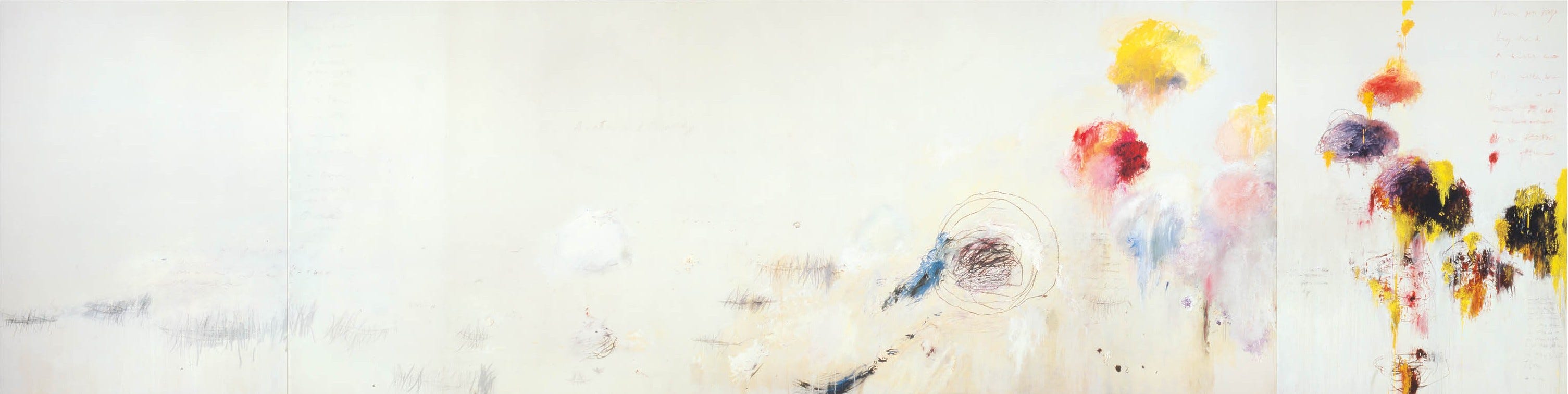
I kept that show in my head for years. I tried desperately to understand why that raw canvas worked so well as space and material.
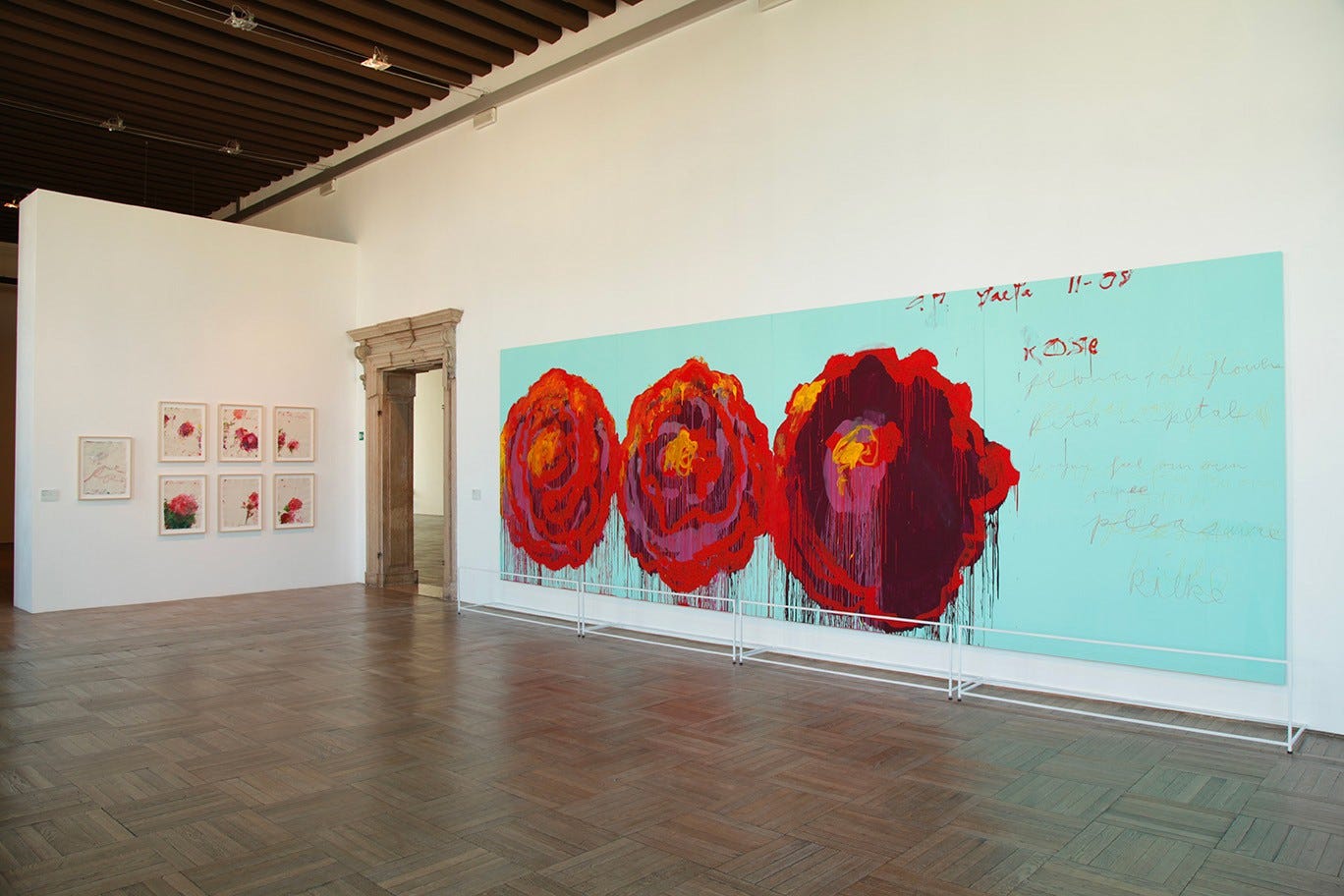
My other significant memory of Twombly is from 2015 in Venice. The show was at Ca’ Pesaro, a magnificent palazzo along the Grand Canal. When I entered the gallery, I was fascinated by the types of light pouring through the rooms, direct, reflected, adjusted, and hand-blown glass. The rooms came alive in this light. The color was brilliant, surprising, and romantic. And the paintings lit up differently each time I moved through these rooms. They were active and unrestrained. After that show, I no longer hesitated about Twombly’s work. I had come to an understanding.
So I took the trip uptown to see Twombly at Gago’s. These paintings are from the Sixties, Seventies, and Eighties, and drawings (OK, I’ll make the distinction – they are works on paper) from the Nineties. I’ve seen many of these works before and greatly appreciate them all. The “chalkboards” have a bit of that visual reticence many painters faced in the Seventies. Think Richter with his gray paintings. The press release says these may be based on Leonardo’s water drawings. And that’s apparent, but why put them on a chalkboard? What’s he trying to teach us? Why is he taking us back to school?
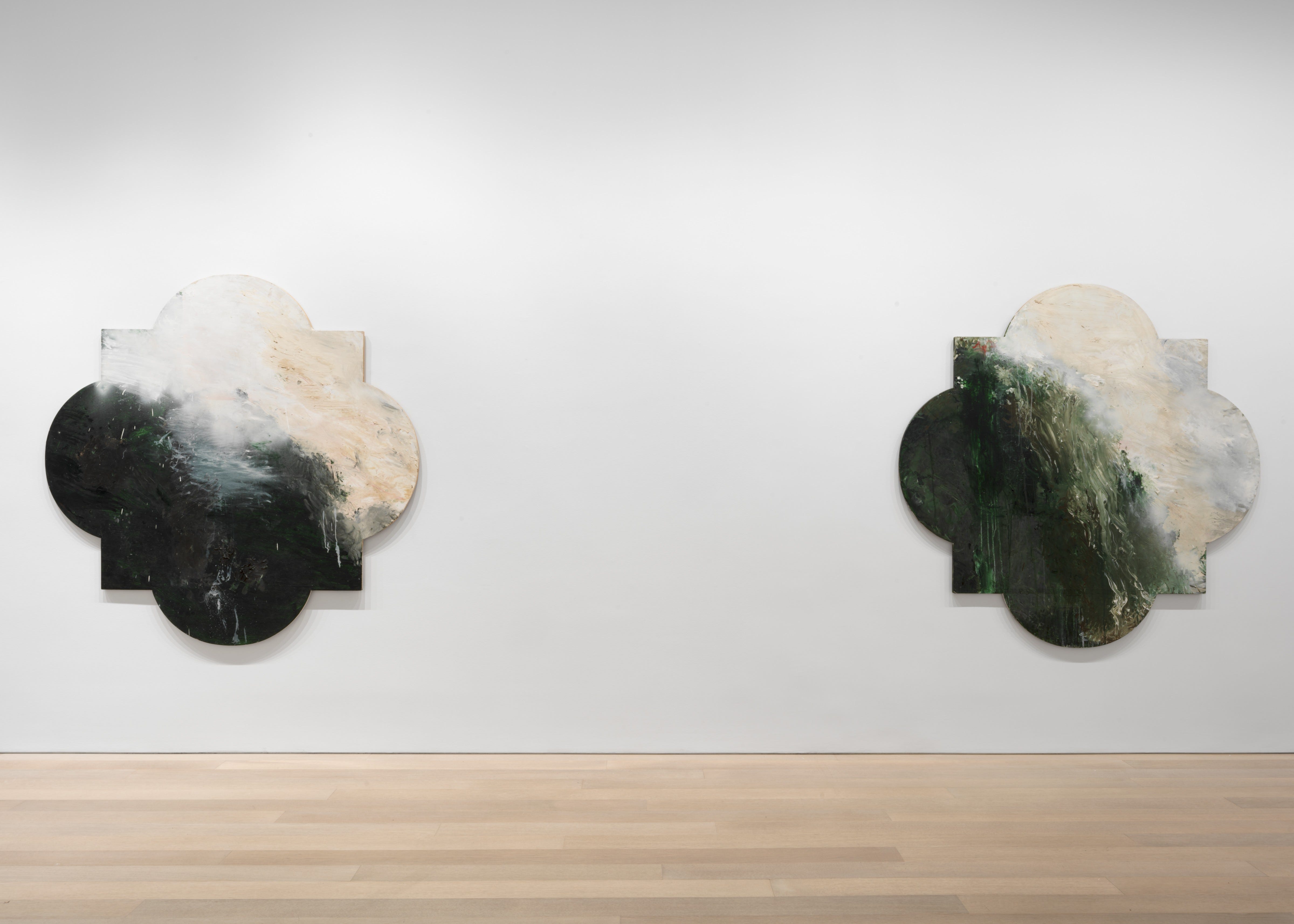
The gardens and bowers are wonderful. The shaped canvases look like they were built for palazzo walls. Twombly uses these anachronistic shapes as historical or poetic objects. It’s surprising to see AbEx-inspired landscape techniques applied to grounds constructed for an earlier century. The rectangular landscapes reference Romantic period paintings full of “sturm und drang.” There is a warning of danger in all of these blackish visions. It’s as if the Arcadian Landscape has been upended by the violence of the 20th Century.
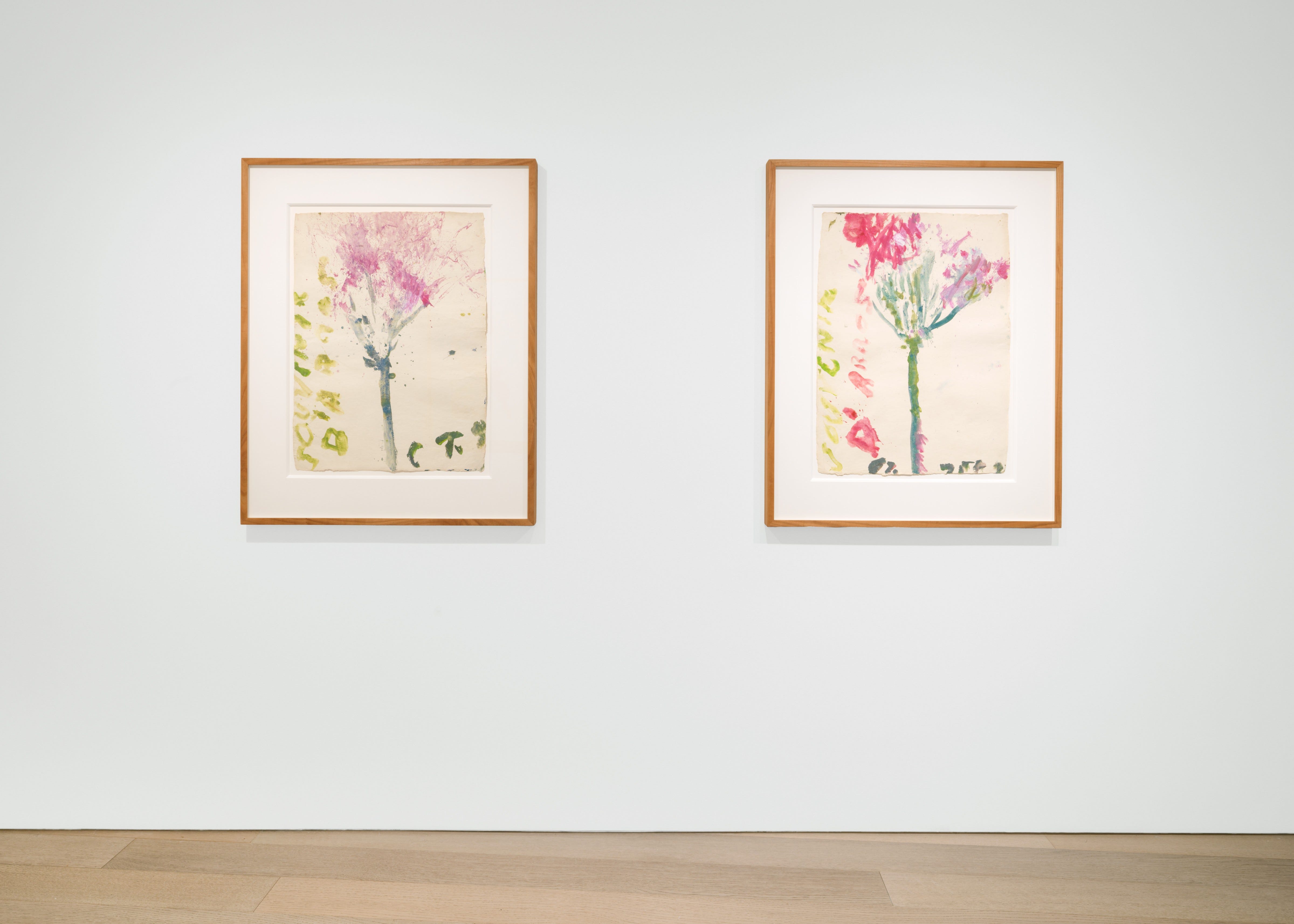
The drawings from the early 90s are delightful. Color, light, space, and somehow, joy! The “flowers” are almost Impressionist in flavor. I see the openness of these works on paper leading Cy to that sizeable open painting on Wooster Street in 1994. To my mind, Twombly took a page out of Cezanne’s book. Paul discovered himself in his later works by drawing. Casual placements, undone compositions, unfinished space, and light cracks open the work. This process is about the studio, working, thinking, and seeing. It’s a raw and intimate vision. Twombly’s studio gets into these works on paper as well. Notes, smears, experiments, and an elegant distance push us into his intentions. We are watching his mind work. This isn’t a style. Twombly is going through a thoughtful investigation into emotions and consequences.
Gagosian
January 23–March 22, 2025
980 Madison Avenue, New York
Mark Stone

Walking through the Past

Abstract Painting
You May Also Like

Reduction Break Off III

MONDRIAN80 – Norte Maar
