
Unspoiled Monsters
Paul Corio @ McKenzie Fine Art
Hustlers. They will find a way to break through your expectations and change your mind. “The point is, the theme moving through your work, as nearly as I can locate it, is of people achieving a desperate aim only to have it rebound upon them—accentuating, and accelerating, their desperation.” [Truman Capote Unspoiled Monsters 1975].
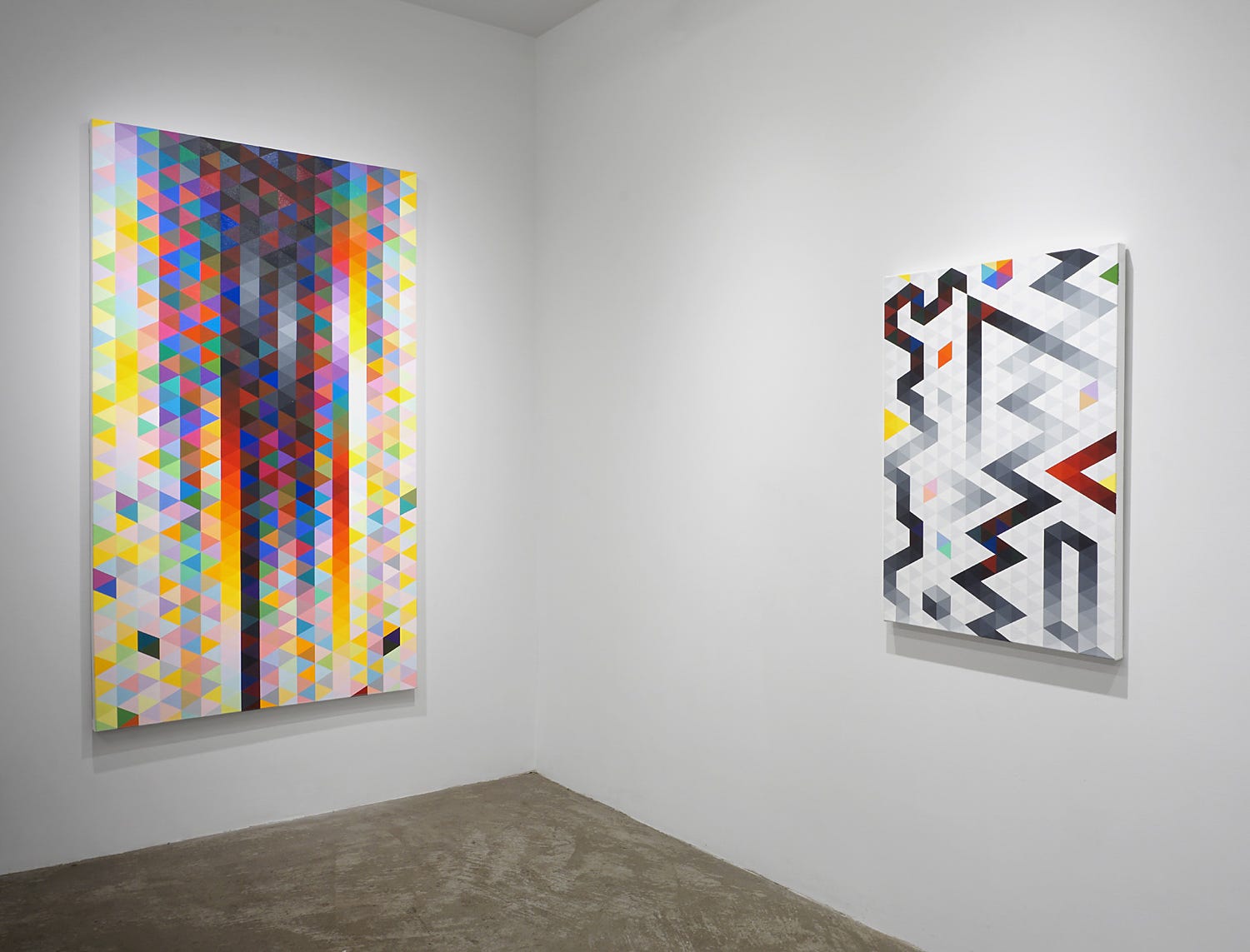
Pictured is Demon’s Deputy (Left) and Thirteen Assassins (Right).
No one expects a “desperate aim” when encountering an abstraction that addresses formal concerns. We’re more focused on the surface, the color and form, pattern and composition. We look for balance, movement, and clever geometry. Emotional experiences and narratives are not usually part of the picture.
But what if this encounter isn’t so simple. What if the painter is after something more than mere perception and illusion? What if the painter is a practiced manipulator using a clever visual seduction to pull us in? What if he wants a more profound experience than what’s seen through the Responsive Eye?
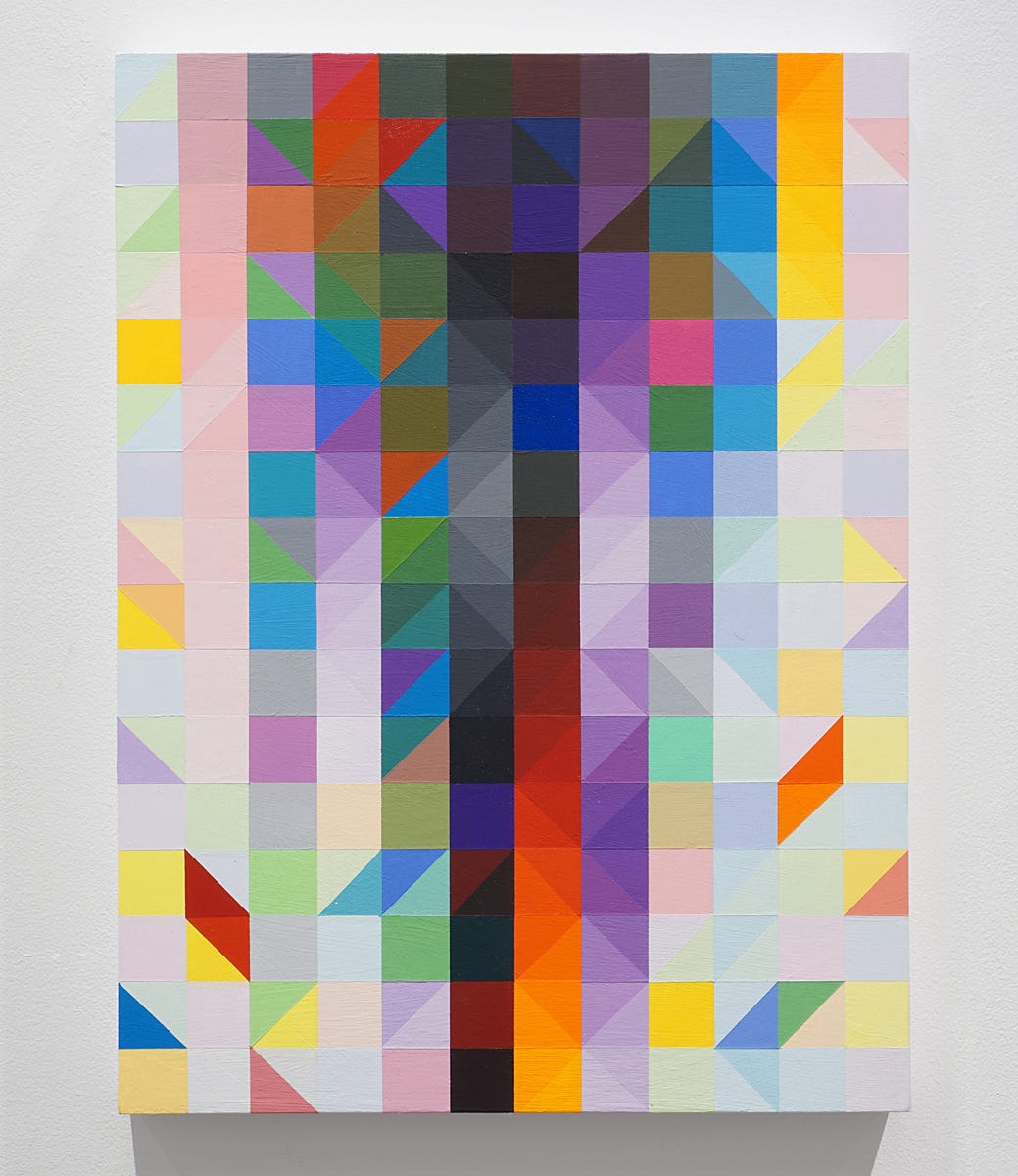
This evolution of perceptual painting began in the late 1970s when a new group of artists repurposed this kind of formalism. “I want to tackle your work from another angle, beginning with the premise that abstraction isn’t really abstraction anymore, that what we call abstraction is so well understood as a system of signs and symbols and modes of representation that it’s really just another kind of representation.” [Dan Cameron in conversation with Ross Bleckner March 2003]. Paul has taken this broad idea of perceptual painting and has included hints of narratives in these repetitive structures.
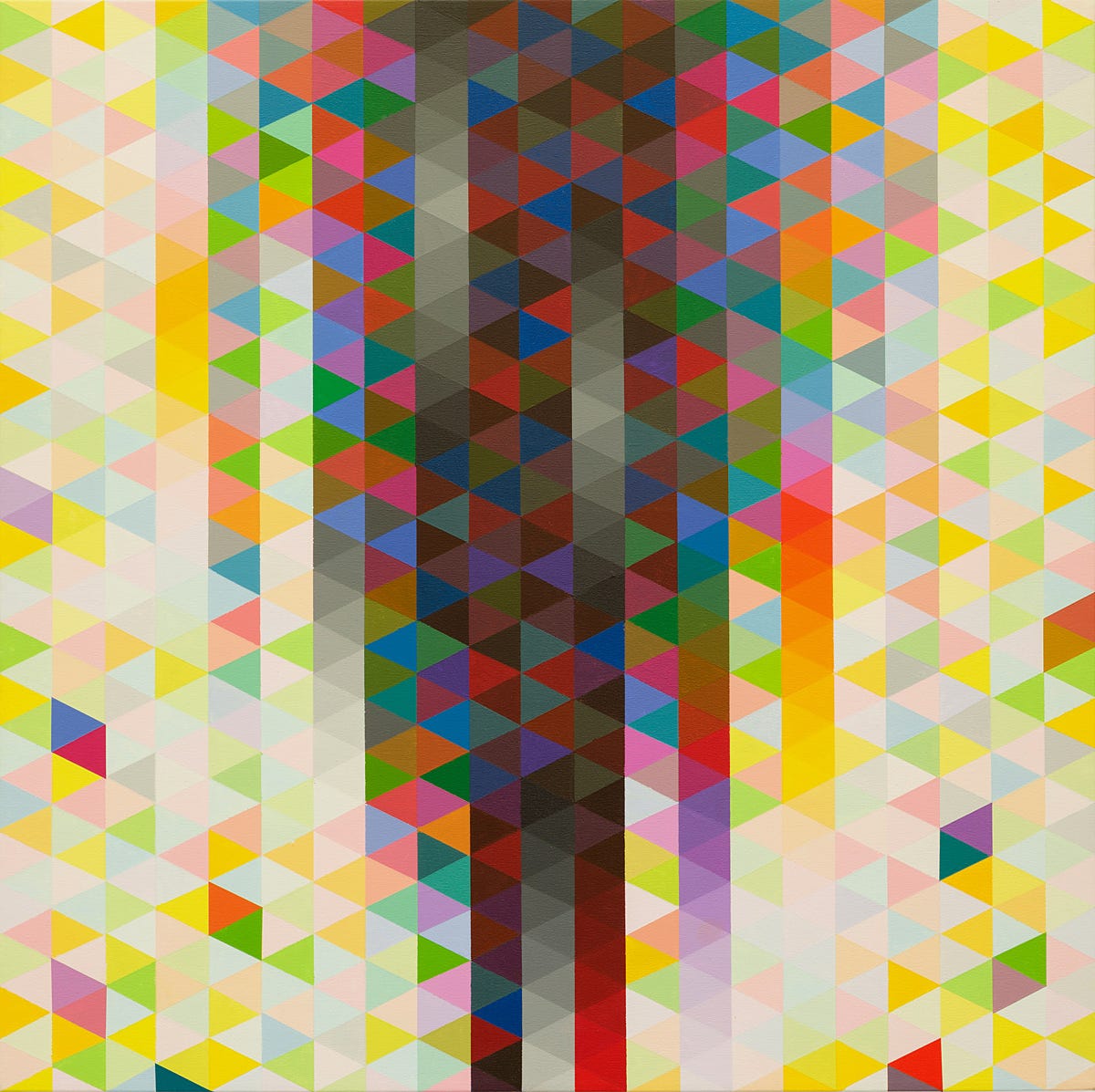
Beat the Devil is both seductive and duplicitous. The painting, dressed as it is in sharp color and pervasive light, is openly hustling the viewer. It promises us one kind of reading and delivers another. How does one beat this kind of devil? All of the formalist tropes, the grids, the geometries, the patterns, the colors, are there, but they are being openly confounded. What we see isn’t what we see. Paul fractures the smooth illusionistic spaces employed by the original Op Art painters like Davis, Riley, Poons, and Vasarely without resorting to the irony used by the 80’s New-Geo painters like Bleckner, Taaffe and Schuyff. He is employing a direct conceptual examination of the tropes of perceptual painting to arrive at a representational abstraction. Paul reveals unexpected narratives hidden within the abstract structures of this painting. He wants something more from us. He’s daring us to look behind the illusions and processes to see something we might not readily recognize. Go ahead. Can you beat this devil?

As you spend time with the works in this show you will catch these deeper narratives. His paintings pull you in, move you across the surface, push you back into space, and leave you breathless. The titles will clue you in. Step back, squint your eyes, and see the abstraction melt into the light. Watch as the complicated color is broken by sudden shifts of geometric logic. The compositions deconstruct themselves right before your eyes even as you’re adjusting your vision. It’s at that point when something deeper grabs hold of you. No matter how you approach these works or how sure you are about what is happening, you will be taken every time. Paul Corio proves to be an exacting formalist hustler. In this show, he is painting surprising and unnerving Unspoiled Monsters.
Go see this exhibition.
Mark Stone
January 2025

George Hofman - Notes to Henri


One Comment
George Hofmann
I keep thinking that the deeper Paul goes, and the more subtle, that he will one day paint a surprise Meninas. He has it in him.